Xander Bennett · 15 October 2026
Exploring Correlations Between Regional Airport Expansion and Local Economic Indicators
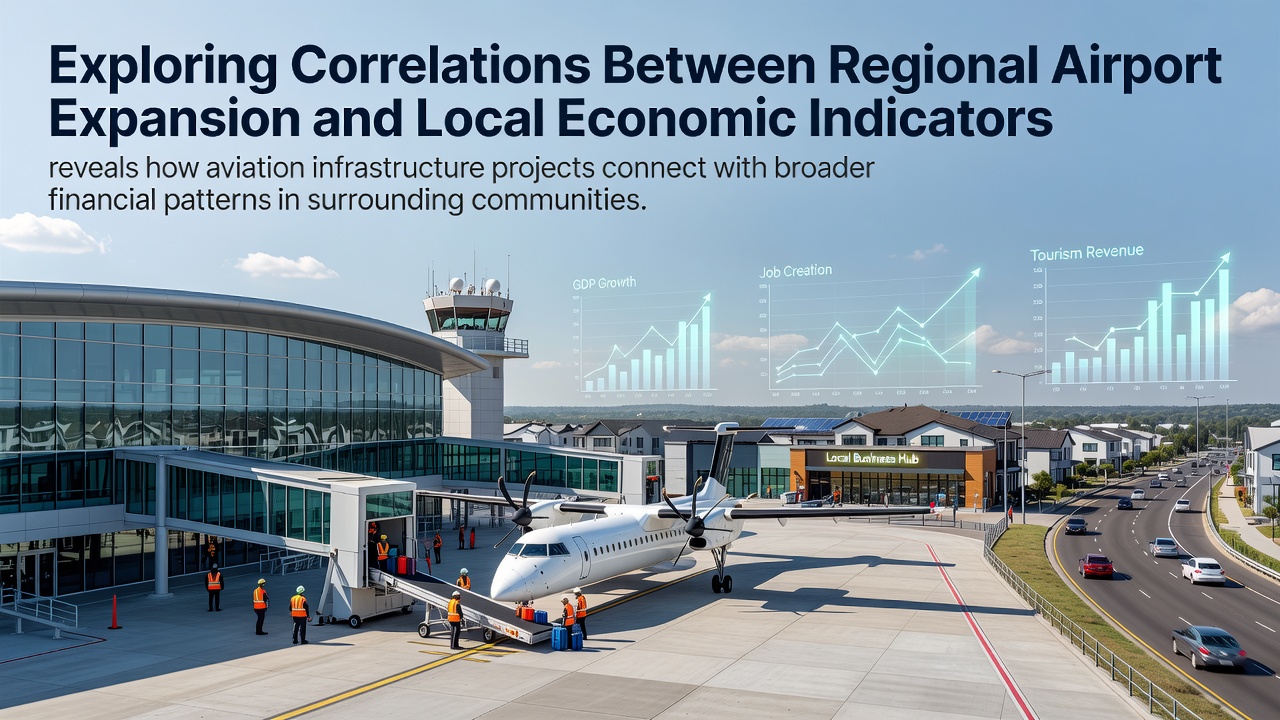
Regional airport expansions have long shown measurable ties to shifts in local employment rates, business formation, and tourism revenue, with studies tracking these patterns across multiple continents. Data from government agencies and industry groups indicate that runway extensions and terminal upgrades often coincide with increases in cargo throughput and passenger volumes, which in turn support logistics firms and hospitality sectors nearby. Observers note that these infrastructure changes frequently align with broader financial indicators such as property tax collections and retail sales figures in adjacent municipalities.
Key Economic Indicators Tracked in Expansion Studies
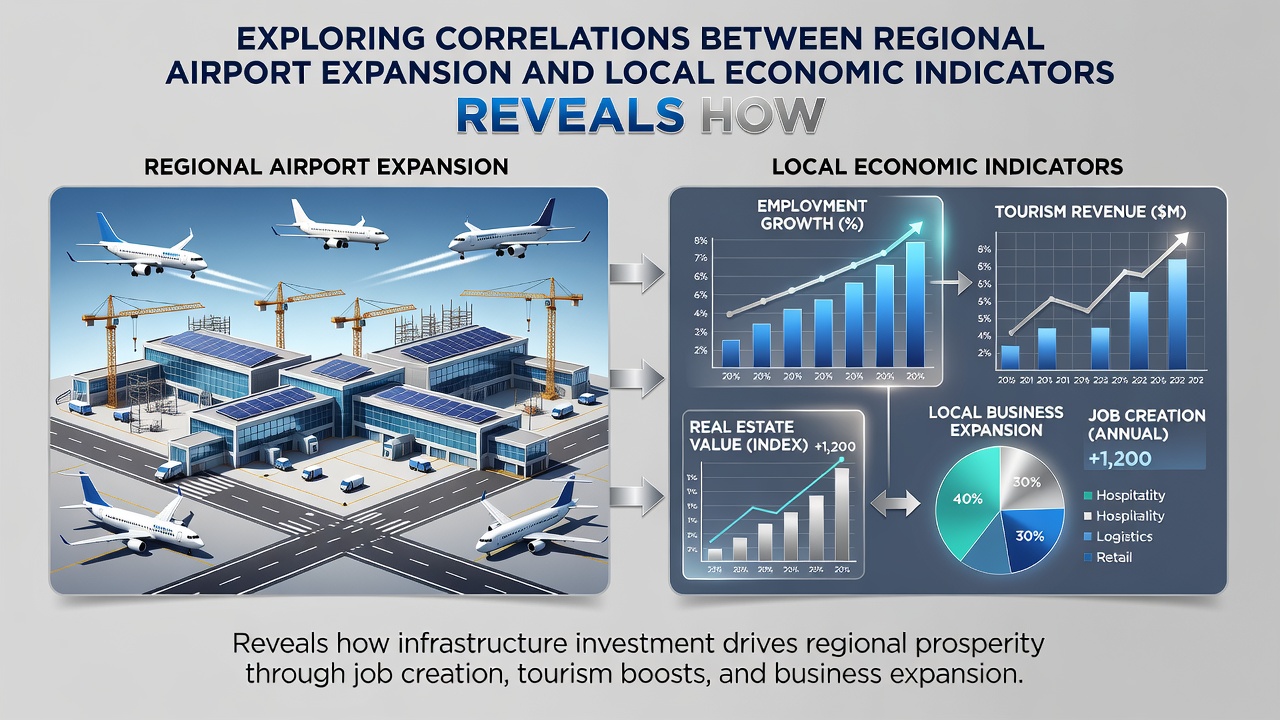
Employment numbers represent one of the most consistently monitored metrics, where researchers have documented job gains in aviation-related fields alongside indirect positions in supply chain and service industries. According to Federal Aviation Administration analyses, airports that completed major capital projects between 2018 and 2024 recorded average workforce growth rates exceeding those in comparable non-aviation communities by several percentage points. Gross domestic product contributions at the county level also tend to rise following such investments, particularly when expansions enable new routes that attract corporate relocations and distribution centers.
Property values near upgraded facilities show parallel movements in many documented cases, with land use reports from planning departments revealing higher commercial assessments within five to ten miles of improved terminals. Tourism spending data collected by state visitor bureaus further illustrate the connection, as increased flight options bring measurable upticks in hotel occupancy and restaurant revenues during peak seasons. Those who have examined these datasets across different regions find that the strength of correlations varies with the scale of the project and the pre-existing economic base of the area.
Regional Examples and Data Patterns
Take the expansion completed at a mid-sized facility in the American Midwest, where records from 2022 onward demonstrate a 14 percent rise in regional freight handling that supported warehouse employment gains tracked by local labor statistics. Similar patterns appear in European cases documented by Eurocontrol reports, where capacity increases at secondary airports correlated with new business registrations in technology and manufacturing clusters. Canadian transport ministry figures reveal comparable outcomes, noting that airports with recent runway improvements experienced accelerated growth in related service sectors compared to national averages.
What's interesting emerges when analysts compare pre- and post-expansion periods using consistent methodologies, revealing that passenger volume growth often precedes measurable changes in local retail sales by six to eighteen months. Academic papers from university research centers have quantified these lags through regression models that control for national economic cycles, allowing clearer isolation of aviation-specific effects. Figures released in October 2026 from ongoing monitoring programs continue to track these relationships as additional facilities reach completion phases.
Methodologies Used to Measure Connections
Economists apply input-output models and econometric techniques to separate aviation-driven effects from other variables, drawing on datasets that include airline schedules, employment surveys, and tax receipts. These approaches allow researchers to estimate multiplier effects, where direct airport activity generates additional rounds of spending in surrounding communities. Data indicates that the magnitude of these multipliers differs based on whether the expansion primarily serves passenger traffic or cargo operations, with cargo-focused projects showing stronger links to manufacturing output in some analyses.
Geographic information systems help map how economic activity radiates outward from airport boundaries, highlighting zones that experience the most pronounced shifts in commercial development. Studies covering multiple expansion cycles demonstrate that communities investing in complementary infrastructure such as road access and utilities tend to capture larger portions of the projected benefits. Patterns observed across different regulatory environments, from U.S. federal programs to EU transport initiatives, suggest that timing relative to broader economic conditions influences the speed at which indicators respond.
Challenges in Establishing Clear Causation
While correlations appear consistently in aggregated data, establishing direct causation requires careful accounting for confounding factors such as simultaneous highway projects or shifts in national trade policies. Research teams address this through difference-in-differences frameworks that compare expanded airports against similar facilities without recent upgrades. Findings from these comparisons show that expansion alone does not guarantee uniform outcomes, as local workforce skills and existing industry composition play significant roles in determining realized gains.
Longer-term monitoring continues to refine these understandings, with October 2026 updates from several longitudinal studies adding new data points on how post-pandemic travel recovery interacts with completed infrastructure work. Trade associations and academic consortia compile these results into comparative reports that help planners anticipate ranges of possible economic responses rather than fixed projections.
Conclusion
The body of evidence compiled from government statistics, industry monitoring, and academic research demonstrates repeatable associations between regional airport expansions and changes in local economic indicators across employment, revenue, and development metrics. These connections operate through multiple channels including passenger flows, cargo movements, and business attraction, though the precise strength varies by project characteristics and regional context. Continued data collection through established programs will further clarify these relationships as additional expansions reach operational status in coming years.