
Jordan Vogel · 17 September 2026
Navigating Algorithm Shifts for Standalone Websites Focused on Aviation Economics
Search engine algorithm updates continue to reshape how standalone websites covering aviation economics attract and retain traffic, with changes that emphasize content depth, data accuracy, and user engagement signals over surface-level keyword placement. Observers note that sites dedicated to topics such as airline operating costs, fuel price volatility, and regulatory impacts on market structures must adapt to these shifts by prioritizing original analysis drawn from primary sources like flight delay statistics and ticket pricing datasets.
Understanding Recent Algorithm Adjustments
Core updates released throughout 2025 and into September 2026 have placed greater weight on E-E-A-T factors, which stand for experience, expertise, authoritativeness, and trustworthiness, when ranking pages that discuss specialized economic indicators in the aviation sector. Data from the Bureau of Transportation Statistics shows consistent growth in queries related to post-pandemic recovery metrics, prompting algorithm refinements that reward sites providing clear methodology sections alongside numerical breakdowns rather than aggregated summaries alone. Those who maintain standalone platforms focused on these themes often find that incorporating time-series charts of load factors and yield management trends improves dwell time, a metric that search engines track through behavioral signals.
Algorithm adjustments also target content that appears to be repurposed from public reports without additional context or interpretation, which affects many niche economics sites that rely heavily on government filings. Researchers have documented cases where pages presenting raw airport revenue figures without linking them to broader trends in passenger demand or aircraft utilization saw ranking drops after the March 2026 rollout. In contrast, sites that integrate explanations of how currency fluctuations influence leasing agreements tend to retain visibility because they demonstrate synthesis of multiple data streams into coherent narratives.
Content Strategies That Align With Current Signals
Standalone websites succeed when they structure articles around specific economic questions, such as the effect of sustainable aviation fuel mandates on carrier margins, and support those discussions with verifiable references to regulatory filings from multiple jurisdictions. One approach involves publishing quarterly reviews that compare transatlantic route profitability data against domestic short-haul economics, drawing from sources that include both North American and European datasets. This method helps algorithms recognize the material as comprehensive rather than thin or duplicated across domains.
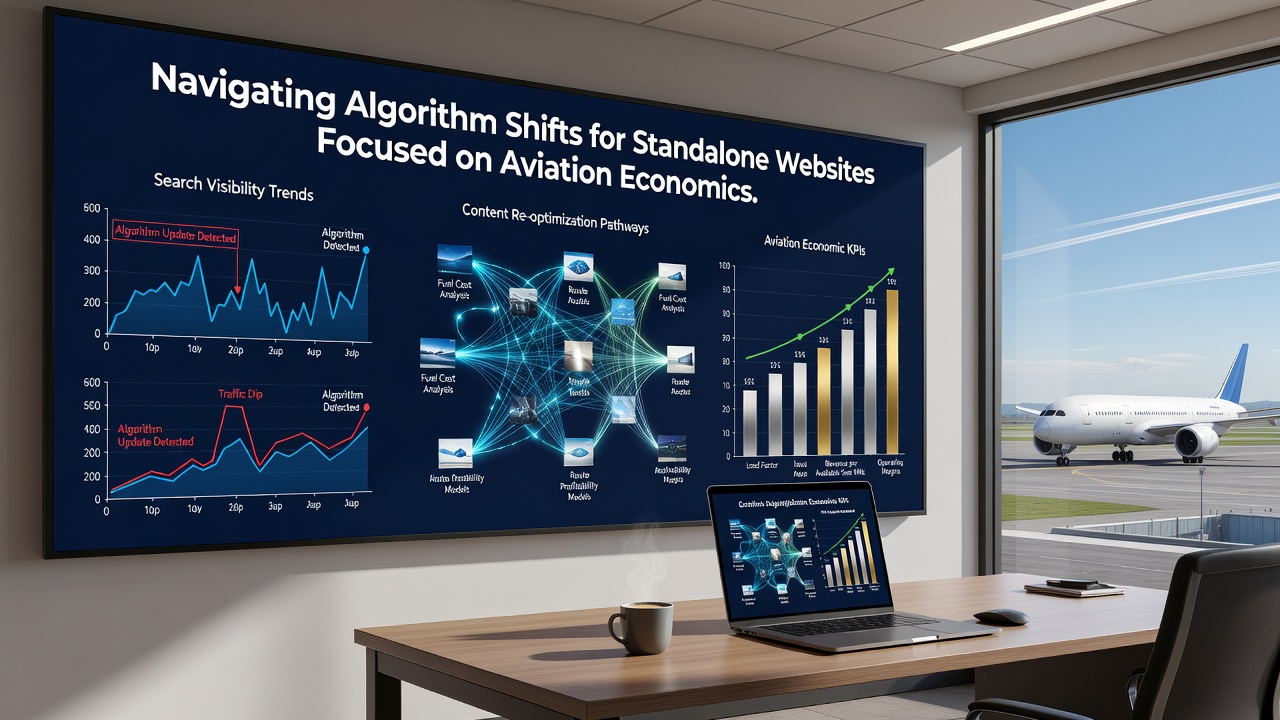
Internal linking patterns matter as well, since algorithm models now evaluate topical clusters more rigorously. Connecting an article on maintenance cost inflation to related pieces about pilot training expenses and ground handling contracts creates a network that signals depth to crawlers. Experts tracking these patterns report that sites using descriptive anchor text within these clusters maintain steadier rankings than those relying on generic navigation menus alone.
Technical and Link-Building Considerations
Page speed and mobile rendering remain foundational because algorithm systems factor in Core Web Vitals when determining whether a standalone site delivers acceptable user experiences during research sessions about complex economic topics. Aviation economics pages often contain tables of historical jet fuel prices or interactive models of hedging strategies, so optimizing image compression and script loading becomes essential to avoid ranking penalties. Technical audits conducted by independent analysts in 2026 consistently highlight that sites passing these metrics while also publishing updated data within days of new releases from agencies like the European Union Aviation Safety Agency gain measurable advantages.
Link acquisition strategies have shifted toward relevance and context rather than volume. Obtaining references from academic repositories that host papers on transport economics or from industry associations that publish policy briefs produces stronger signals than generic directory listings. A single authoritative placement within a university-hosted analysis of regional airport competition can outweigh multiple lower-quality mentions because the surrounding content already aligns thematically with aviation economics themes.
Monitoring and Adaptation Practices
Website operators track ranking fluctuations through segmented analytics that separate branded queries from long-tail terms related to specific economic indicators, allowing them to isolate the impact of individual algorithm changes. Regular reviews of search console data reveal which pages lose impressions after updates, prompting targeted revisions that add primary source citations or expand methodological transparency. Those managing independent sites note that maintaining version histories of articles helps demonstrate ongoing updates, a factor that newer ranking systems appear to reward when evaluating content freshness in fast-moving sectors like aviation finance.
Conclusion
Standalone websites covering aviation economics navigate algorithm shifts most effectively when they combine rigorous sourcing, clear topical clustering, and technical performance standards that match evolving search engine priorities. Adaptation involves continuous monitoring of data releases from government and regulatory bodies across regions, along with structural adjustments that reflect how algorithms now assess expertise and user utility. This approach supports sustained visibility without reliance on tactics that have become less effective under current evaluation frameworks.